

Skin conditions affect millions of individuals every day. Finding the right treatment can feel overwhelming with so many options available. The good news is that modern medicine offers a range of solutions tailored to individual needs. From time-tested creams to cutting-edge therapies, each approach plays a unique role in healing. Understanding how these treatments work together creates a powerful path toward healthier skin and renewed confidence.
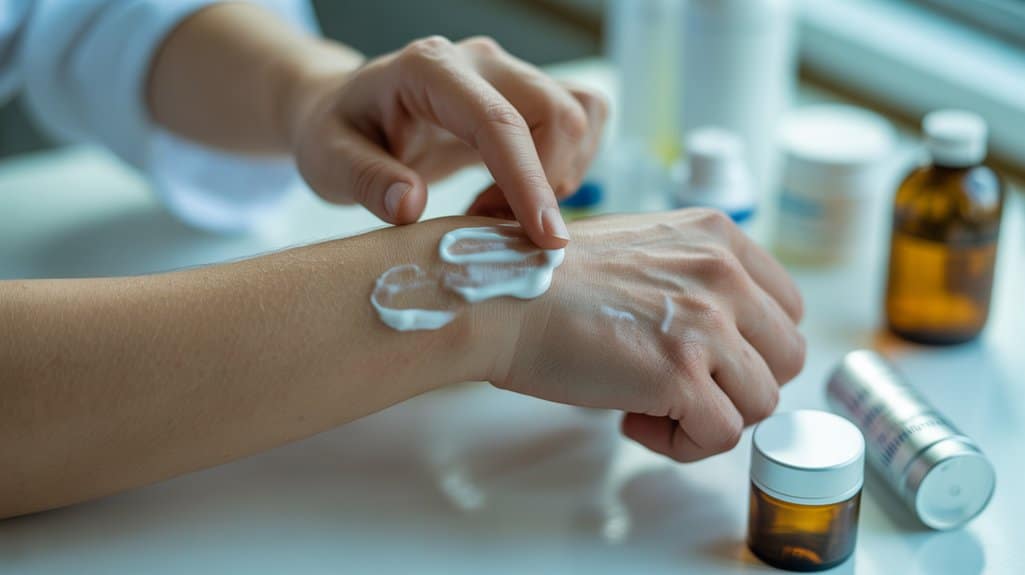
When skin problems flare up, most individuals start treatment right at home with creams and ointments. This approach makes perfect sense. Topical applications work directly where irritation happens, bringing relief without affecting the whole body. Think of it like putting a bandage on a scraped knee rather than taking medicine for your entire system.
Local effectiveness means faster results with fewer complications. You control what goes on your skin and when. Modern formulas offer powerful healing while respecting your body’s natural balance. This foundation gives you freedom to manage conditions on your own terms, building confidence through simple, direct action.
Flare-ups bring the kind of discomfort that demands quick action. Corticosteroids step in as trusted allies during these challenging moments. Their corticosteroid efficacy shines through rapid inflammation control, calming angry skin within days. Modern formulations have altered side effect management, making these treatments safer than ever before.
Key benefits include:
Understanding proper application and duration prevents unwanted effects. Short-term use during flare-ups maximizes benefits while minimizing risks. This balanced approach enables individuals to take charge of their skin health confidently.
Many individuals need ongoing protection for their skin but worry about using steroids for months or years. That’s where calcineurin inhibitors step in as trusted companions. These steroid-free options, like Tacrolimus and Pimecrolimus, offer real calcineurin benefits without thinning your skin over time. They work by calming down overactive immune responses that trigger flare-ups. Their long term effectiveness makes them ideal for sensitive areas like your face and neck. You gain freedom from steroid concerns while maintaining control over atopic dermatitis. Think of them as gentle guardians, protecting your skin day after day without the unwanted side effects.
While calcineurin inhibitors offer gentle, ongoing care for sensitive skin, some conditions need a different kind of help. Psoriasis treatment often requires vitamin D derivatives like Calcipotriol to slow runaway cell growth. This therapy gives you freedom from constant flare-ups by regulating how quickly skin cells multiply.
Key benefits include:
This approach restores balance, letting your skin heal naturally and stay healthier longer.
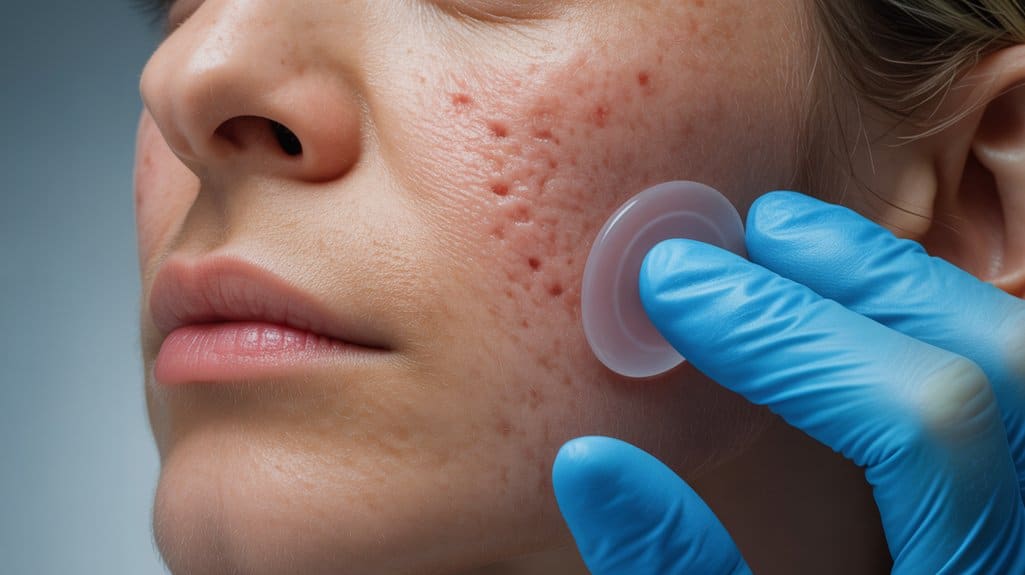
When redness and visible blood vessels take over facial skin, specialized rosacea treatments step in where general approaches fall short. Metronidazole, Ivermectin, and Brimonidine target inflammation and visible symptoms directly. However, treatment adherence works best alongside patient education about rosacea triggers. Environmental factors like sun exposure and temperature extremes matter significantly. Lifestyle changes including gentle skincare routines help maintain progress. Dietary modifications can reduce flare-ups for many individuals. Stress management techniques support overall skin health naturally. Understanding personal triggers enables individuals to take control of their condition while working with medical professionals to find lasting relief.
Sunlight has helped heal skin conditions for thousands of years, long before scientists understood why it worked. Today, UV exposure offers treatment benefits through controlled light therapy. Doctors consider your skin type when planning sessions. Light timing and therapy frequency matter for safety considerations and recovery expectations. Patient experience improves when treatments feel empowering rather than restrictive.
Key therapy approaches include:
Each method respects your body’s ability to heal while providing gentle encouragement toward clearer skin.
Most skin treatments work like painting an entire wall when only one corner needs attention. Excimer laser benefits change this approach entirely. This precision skin treatment targets only problem spots at 308 nanometers, leaving healthy skin untouched. You choose what gets treated.
| Traditional Method | Excimer Laser |
|---|---|
| Treats large areas | Targets specific spots |
| Affects healthy skin | Protects surrounding tissue |
| Takes more time | Quick focused sessions |
| General approach | Personalized precision |
This laser works wonders for stubborn psoriasis patches and tough eczema spots. Your body decides where healing happens, not blanket coverage.
How does salt water team up with light to heal skin conditions? Balneophototherapy brings natural healing through sea therapy right into the treatment room. This approach mimics relaxing days at the beach. Patients soak in special salt baths, then receive gentle UV light exposure. The combination works better than either treatment alone.
Key benefits include:
This gentle method offers freedom from harsh chemical treatments while delivering real results.
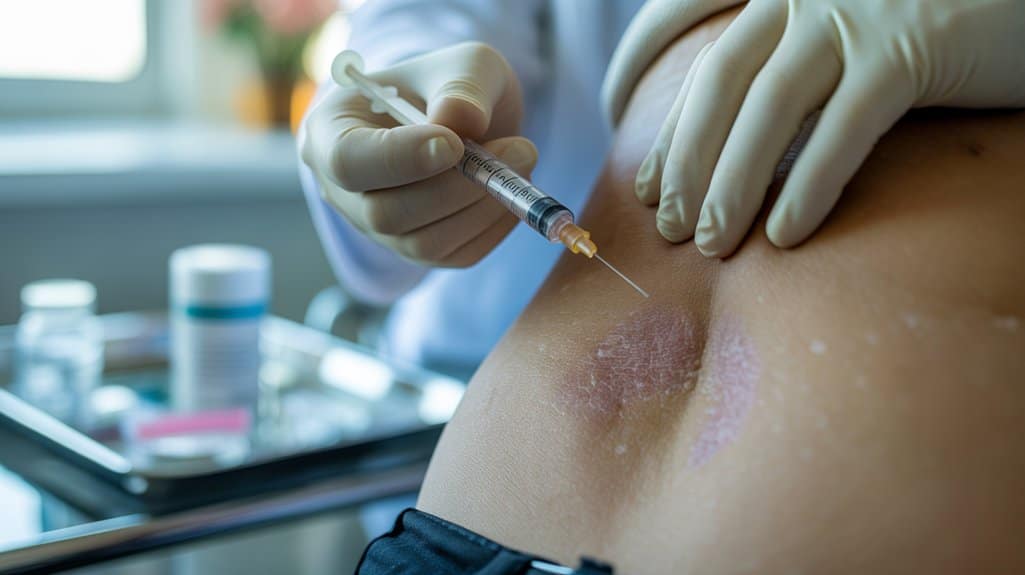
When skin conditions refuse to respond to creams and light treatments, biologic therapies step in as powerful allies. These specialized medicines target specific parts of your immune system causing inflammation. Think of them as smart helpers that find and calm overactive signals creating chaos in your skin. Medications like Dupilumab for eczema or TNF-alpha blockers for psoriasis offer real hope for severe cases. However, biologics challenges include regular injections and higher costs. Success depends heavily on patient compliance to treatment schedules. Despite obstacles, these advancements restore comfort and control for many seeking freedom from debilitating skin conditions.
Unlike biologics that work outside cells, JAK inhibitors dive straight into the action happening within. These small molecules block JAK pathways, shutting down inflammation modulation right at the source. Think of them as your body’s tiny peacekeepers, calming overactive immune signals before they spiral out of control.
Key benefits include:
Examples like Baricitinib and Abrocitinib represent fresh hope for individuals seeking relief without needles or constant doctor visits.
While the active ingredients in skin creams often steal the spotlight, the base that carries them matters just as much. Different ointment textures affect how well medicine soaks into skin. Oily bases excel at moisture retention, perfect for dry skin types. Lighter formulas suit oily appearances better. Base selection influences absorption rates significantly. Patient preferences play a vital role, some individuals dislike greasy feelings, others need that protective layer. Proper application techniques maximize formulation effects. Ingredient compatibility ensures nothing interferes with treatment efficacy. Choosing wisely means medicine works better, helping skin heal faster and feel more comfortable throughout the day.
Corticosteroids are the standard first-line treatment for eczema flare-ups and psoriasis, working quickly to reduce inflammation. Modern formulations have reduced side effect risks compared to older versions. Calcineurin inhibitors like Tacrolimus and Pimecrolimus offer a steroid-free alternative, particularly valuable for long-term management of atopic dermatitis. The key advantage of calcineurin inhibitors is that they don’t cause skin thinning (atrophy), making them ideal for sensitive areas like the face and eyelids. Your dermatologist will recommend the appropriate option based on your condition severity, treatment location, and duration needs.
UV light therapy harnesses the healing properties of specific light wavelengths to treat inflammatory skin diseases. Narrowband UV-B therapy at 311 nm is particularly effective for atopic dermatitis and psoriasis, helping to slow excessive skin cell growth and reduce inflammation. UV-A1 therapy penetrates deeper into the skin layers. The excimer laser at 308 nm allows precise targeting of affected areas while protecting healthy surrounding skin. Treatment typically requires multiple sessions over several weeks. Balneophototherapy combines salt baths with UV exposure, mimicking the therapeutic effects of seaside climates for enhanced results.
Systemic treatments are reserved for severe cases that don’t respond adequately to topical medications or light therapy. If your skin condition significantly impacts quality of life, covers large body areas, or remains uncontrolled despite consistent topical treatment, systemic options may be necessary. These include biologics, JAK inhibitors, or conventional immunosuppressants. Your dermatologist will evaluate disease severity, previous treatment responses, overall health status, and potential risks before recommending systemic therapy. Regular monitoring through blood tests and clinical assessments ensures safety and effectiveness throughout treatment.
Biologics are advanced medications derived through biotechnology that precisely target specific components of the immune system responsible for inflammation. Unlike conventional treatments that broadly suppress immunity, biologics work like guided missiles, blocking particular inflammatory pathways. Dupilumab targets interleukin pathways in atopic dermatitis, while TNF-alpha inhibitors and other interleukin blockers treat psoriasis. Administered through injections, biologics offer significant improvement for moderate-to-severe cases with fewer systemic side effects than traditional immunosuppressants. They represent a significant advancement in managing chronic inflammatory skin diseases that were previously difficult to control.
The ointment base significantly influences treatment success by affecting how active ingredients penetrate and interact with your skin. Oily bases provide superior moisture retention and create an occlusive barrier, ideal for very dry, thickened skin conditions. They enhance absorption of certain medications but may feel greasy. Watery bases (creams or lotions) absorb quickly and feel lighter, making them more comfortable for hairy areas or warmer climates. Your dermatologist considers your skin type, affected body area, climate, personal preference, and the specific condition when selecting the optimal base formulation for maximum therapeutic benefit.
JAK inhibitors are newer small-molecule medications that work inside cells to block specific inflammation signals, offering targeted action with oral administration. Medications like Baricitinib and Abrocitinib provide an alternative to injected biologics. Traditional systemic therapies including Methotrexate, Cyclosporin A, and Fumaric Acid work more broadly to suppress immune responses throughout the body. While conventional immunosuppressants have longer track records and lower costs, JAK inhibitors offer the convenience of pills rather than injections and may work faster in some patients. Both require regular medical monitoring for potential side effects.
Treatment response times vary significantly by method and condition severity. Topical corticosteroids often show improvement within days to two weeks for acute flare-ups. Calcineurin inhibitors may require four to six weeks for noticeable effects. UV light therapy typically needs 15-25 sessions over several weeks before substantial improvement occurs. Biologics can produce visible results within four to twelve weeks, with continued improvement over months. JAK inhibitors may work faster, sometimes showing benefits within two to four weeks. Consistency is essential, premature discontinuation often leads to relapse. Your dermatologist will establish realistic timelines based on your specific diagnosis.
Vitamin D derivatives, particularly Calcipotriol, are primarily indicated for psoriasis treatment, where they effectively regulate excessive skin cell division and reduce scaling. While their primary approval focuses on psoriasis, some dermatologists may use them off-label for certain hyperproliferative skin conditions. However, they’re not typically recommended for atopic dermatitis or rosacea, which have different underlying mechanisms. Calcipotriol is often combined with corticosteroids for enhanced effectiveness in psoriasis management. The treatment works best on plaque-type psoriasis and requires consistent application over weeks to achieve optimal results.
Rosacea requires specialized topical treatments tailored to its unique inflammatory pattern. Metronidazole serves as a foundational anti-inflammatory agent that reduces redness and papules. Ivermectin addresses the inflammatory component and potential Demodex mite involvement in rosacea. Brimonidine specifically targets facial redness by constricting blood vessels, providing rapid but temporary cosmetic improvement. Treatment selection depends on your rosacea subtype, whether primarily characterized by redness, bumps, or both. Your dermatologist may combine these agents with lifestyle modifications and gentle skincare routines for comprehensive management of this chronic facial condition.
Combining treatment modalities often produces superior outcomes for chronic inflammatory skin conditions. Your dermatologist may recommend using topical medications alongside light therapy for enhanced effectiveness. Some patients benefit from combining biologics with topical treatments to address both systemic inflammation and localized symptoms. The treatment analogy comparing methods to fire suppression illustrates this approach: topical agents act like small extinguishers, light therapy functions as a sprinkler system, and biologics serve as specialized response teams. Combination strategies must be carefully coordinated to avoid excessive immunosuppression or irritation while maximizing therapeutic benefits and improving long-term disease control.
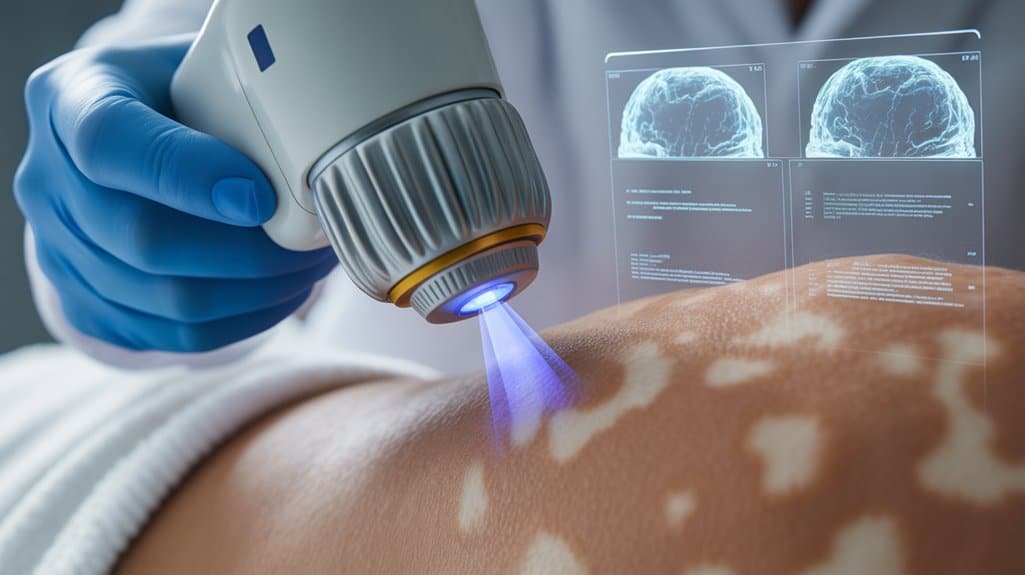
As dermatology continues to advance, exciting new treatment options are emerging that promise even better results for individuals struggling with chronic skin conditions. Novel drug formulations are making medications work faster and more effectively. Digital health innovations now let individuals track symptoms from home, giving them greater control over their care journey.
What’s New in Skin Treatment:
These advancements offer fresh hope and independence.