

Traditional Japanese hair brushes have recently appeared in both Vogue Arabia and British Vogue, recognized for their ability to care for the scalp while detangling and distributing products through the hair. These tools represent a shift in how people approach haircare, moving beyond products alone to consider the instruments that touch the scalp and hair daily.
The brushes combine centuries-old Japanese craftsmanship with an understanding of scalp health that aligns with current dermatological thinking. Rather than focusing solely on how hair looks, they address the foundation from which healthy hair grows: a well-maintained, comfortable scalp.
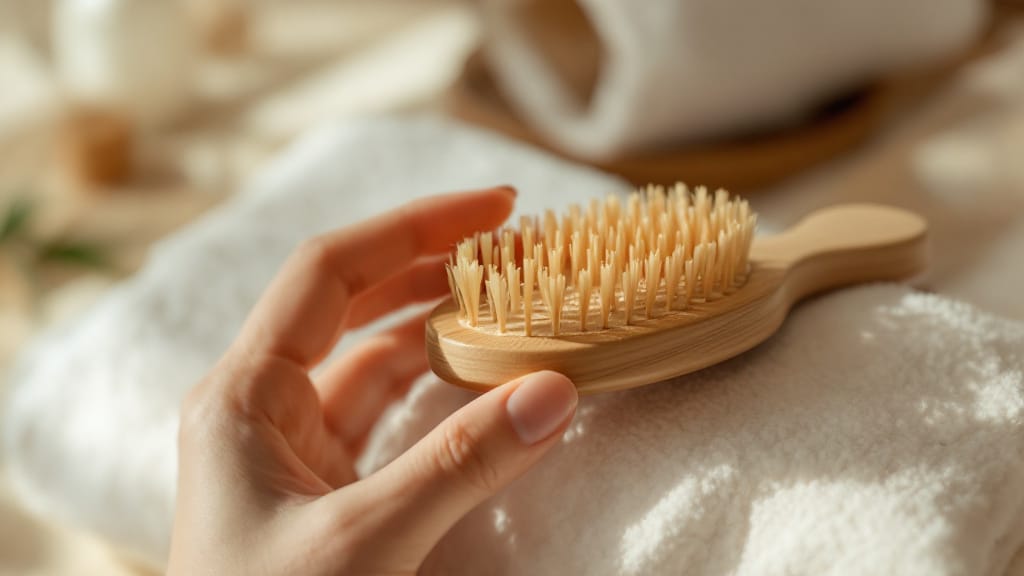
Japanese hair brushes typically feature natural bristles, often boar hair, and flexible pins arranged to work with the hair rather than against it. The design allows the brush to glide through tangles without pulling or breaking strands, while the bristles stimulate the scalp gently.
Sophie Bolvary, a licensed massage therapist at Sanara, explained to Vogue that the lymphatic system does not have a pump of its own, meaning it only starts working when we move our body or when it is stimulated manually by dry brushing or light massage. This principle applies to scalp brushing as well, where gentle stimulation may support circulation.
The scalp is an extension of facial skin and requires similar care. Y. Claire Chang, MD, a board-certified dermatologist at UnionDerm, told Vogue that it is important to maintain a healthy skin barrier on the scalp just like the rest of the body. Regular brushing with the right tool can contribute to this maintenance.
Dermatologist Shilpi Khetarpal told Cleveland Clinic that brushing unclogs pores through gentle exfoliation and helps detoxify skin by increasing blood circulation. When applied to the scalp, this process removes product buildup and dead skin cells that can accumulate between washes. The increased circulation may also support the delivery of nutrients to hair follicles.
Boar hair bristles work well for daily exfoliation and are gentle enough for most scalp types. The bristles should be firm enough to provide stimulation but flexible enough to bend slightly when pressed against the scalp. Japanese brushes often feature a combination of bristle types to both massage the scalp and smooth the hair shaft.
For those with fine hair, a brush with softer, more flexible pins prevents breakage. Tina Spranz, a Hamburg-based massage therapist at Aesthetics Care, told Vogue that the use of dry brushes can have a positive effect, provided there are no secondary illnesses. Anyone with scalp conditions should consult a dermatologist before adding vigorous brushing to their routine.
Start with dry hair before washing. Begin at the hairline and work in gentle, rhythmic strokes toward the crown, following the natural direction of hair growth. Use light to moderate pressure; the goal is stimulation, not aggressive scrubbing.
| Step | Action | Duration | Pressure |
|---|---|---|---|
| 1 | Brush from hairline to crown | 2 minutes | Light |
| 2 | Work through mid-lengths | 1 minute | Moderate |
| 3 | Distribute natural oils to ends | 1 minute | Light |
| 4 | Massage scalp in circular motions | 1 minute | Light |
After brushing the scalp, continue through the lengths of the hair to distribute sebum from the scalp down the hair shaft. This natural oil provides moisture and shine without added products. The entire process takes about five minutes and can be done before showering or as part of a morning routine.
Japanese brushes work particularly well for distributing leave-in treatments, scalp serums, or oils. Apply the product to the scalp or hair, then use the brush to work it through evenly. The flexible pins separate strands without pulling, making the brush useful for detangling as well.
For those with fine hair, celebrity hairstylist Becca Kreager told Vogue that choosing lightweight products and tools prevents the hair from looking flat or greasy. A Japanese brush distributes product so thoroughly that less is needed overall, which helps maintain volume.
Healthy hair grows from a healthy scalp. Morgan Rabach, MD, a board-certified dermatologist and cofounder of LM Medical NYC, told Vogue that overwashing, using hot water in the shower, excessive hot tool use, and overprocessing hair with harsh chemicals can all contribute to scalp dryness. Regular brushing helps counteract some of these effects by maintaining circulation and removing buildup without harsh cleansing.
Sebum production can decrease with age and during hormonal changes, making the scalp more prone to dryness. Dr. Chang noted this in her conversation with Vogue, explaining why consistent scalp care becomes more important over time. A quality brush helps distribute the sebum that is produced, making the most of the scalp’s natural moisturizing system.
The ritual of brushing offers benefits beyond the physical. Bolvary told Vogue that the brisk rhythmic motion creates a sensory reset that can be both grounding and energizing, helping to sharpen mental alertness and brighten mood. This aligns with Japanese beauty philosophy, which views skincare and haircare as mindful self-care practices rather than purely cosmetic routines.
The practice requires slowing down and paying attention to how the scalp feels, what the hair needs, and how the body responds. This mindful approach to daily maintenance reflects a broader appreciation for Japanese beauty tools that support both physical health and mental calm. As these brushes gain recognition in international beauty publications, they represent a growing interest in haircare that addresses the whole person, not just the appearance of individual strands.
Some of the images and/or text were created and optimised with the aid of AI, zimmwriter.de. In the interests of transparency and in accordance with the standards of the EU AI Regulation, we would like to point out that the content was subsequently subjected to careful editorial review and human verification. The final editorial responsibility lies with the publisher.
